Can we really enter the kingdom of God that Jesus describes for us without imaginations? We must become like "children," Jesus says. The kingdom is for "those with ears to hear and eyes to see". We live into the kingdom as we hear the voice of God and respond faithfully. This response is not some mechanical, rule-oriented, do-this, don't do-that, ritualistic, works obedience to God's law. As a matter of fact God's law is not static and unmoving, but flowing, adaptable to all situations and grace oriented as what is in the best interests of His creation at any given moment. The response to God's Word as Jesus explained and demonstrated is mystical, relational, in connection with all things, cosmic in significance whether small or large, and simply organic in nature. We cannot confine God and His Word into some tablet, book of law or even a self-help manual for life. The Word of God is alive, free-flowing, and speaks to us dynamically through the voice of the Spirit. At the essence of kingdom living is love. As we learn to live and love imaginatively and fully, without holding back, without reserve, we find ourselves in another dimension of reality, one that moves and breathes with all of creation as a positive healing force. This alternate reality kingdom is not reserved for special buildings, groups of people, cultures or nations, but is open and available to any and all who make themselves available to God through His living Word, Jesus Christ.
"Lord, do not allow us to run through the pages of your Bible without, somewhere, encountering you... send your divine breath, your Holy Spirit, so that we may indeed commit ourselves to the deep and come to you across the waters. Give us a simple heart, able to marvel and leap at the sound of your voice, as children leap to the voice of their father... We beseech you: "Let us hear your voice!" - Raniero Cantalamessa
Real people are real complicated. So much of our interaction with people in and out of the church is superficial. We are certainly guilty of defining others with simple adjectives and allowing that to guide our relationships. In order to get to know others as real, complicated people, we must let down our guards, open our homes and lives, and live life together, in the good, bad and ugly. Refrigerator rights are what it takes, getting to a place where we hang out and share existence, rather than just crossing paths in the foyer and singing together in the choir.
I appreciated what Greig said about our society's virtual denial (my words) about the difficulty of life. We have embraced a victim perspective and see ourselves as entitled to have "happiness" handed to us on a silver platter. This is one of the best books on prayer I have read since many of the classics like E.M. Bounds, and devotionals like Streams in the Desert. Our ancestors knew that life is difficult. They experienced death and suffering first hand, regularly, without the miracles of contemporary medical technology. They were not desensitized by violence and blood on television and in movies. They experienced those things first hand as they went about daily lives, slaughtering pigs, chopping heads off of pet chickens, and burying family members by hand. Life was hard, as it is for most of the rest of the world. Most of the poor folks I know are happier than those with lots of comforts and toys. Why is that?
Greig makes the point well: When life is viewed from the perspective of tough, the blessings of God, small and large, experienced daily in life are illuminated and amplified big time. Rather than blame God when tragedy strikes, or difficult times are had, those with a real perspective of the difficulty of life and suffering are able to see the good God is bringing out of the situation, and appreciate more resolutely the small blessings of life. We move forward through life, doing the best we can, clinging to Jesus, family and friends.
Yes, God is sovereign, but God gets blamed for way more than He deserves. I cringe when I hear people say: "well if God wants her, he'll take her." Life is difficult, and illness and death happen (now anyway). The hope we have though is that God is making all things new, and one day Jesus will wipe away every tear and take away pain and suffering. Until then, we walk through life with dignity, hope and joy able to withstand anything this life can throw at us, because God is with us, and God is good! Mystery? yes. Truth? yes, I believe.
Is virtual reality denial the contemporary darkness which the light of Christ must dispel?
Lord Jesus, I want to remain centered in and focused in you. Not just during this time of Lent, but every moment of every day of my temporal existence here in this place. I want to walk step by step in your eternal joy, listening carefully to your teaching, watching closely your every move, becoming more and more who you created me to be. I want to be your disciple, to follow you any and everywhere. I want to be acutely aware of my alien status here in this place at this time, but also keenly sensitive to your calling and sending wishes as I do my best to serve, love, live fully. Lord Jesus, I am yours. Thank you for inviting me into your Presence. Help me to welcome others as willingly and freely as you welcome me to your Throne of Grace. I love you Lord, Father, Son and Holy Spirit. Help me to keep that in the forefront of all my being and doing. Amen.
Isaiah 53 (msg)
Who believes what we’ve heard and seen? Who would have thought God’s saving power would look like this? The servant grew up before God – a scrawny seedling, a scrubby plant in a parched field. There was nothing attractive about him, nothing to cause us to take a second look. He was looked down on and passed over, a man who suffered, who knew pain firsthand. One look at him and people turned away. We looked down on him, thought he was scum. But the fact is, it was our pains he carried – our disfigurements, all the things wrong with us. We thought he brought it on himself, that God was punishing him for his own failures. But it was our sins that did that to him, that ripped and tore and crushed him – our sins! He took the punishment, and that made us whole. Through his bruises we get healed. We’re all like sheep who’ve wandered off and gotten lost. We’ve all done our own thing, gone our own way. And God has piled all our sins, everything we’ve done wrong, on him, on him.
He was beaten, he was tortured, but he didn’t say a word.
Like a lamb taken to be slaughtered and like a sheep being sheared, he took it all in silence…
excerpt from: Henri J.M. Nouwen, “The Way of the Heart”
The Desert Fathers praise silence as the safest way to God. “I have often repented of having spoken,” Arsenius said, “but never of having remained silent (43).” Silence is an indispensable discipline in the spiritual life (44). Over the last few decades we have been inundated by a torrent of words. Wherever we go we are surrounded by words: words softly whispered, loudly proclaimed, or angrily screamed; words spoken, recited, or sung; words on records, in books, on walls, or in the sky; words in many sounds, many colors, or many forms; words to be heard, read, seen, or glanced at; words which flicker off and on, move slowly, dance, jump or wiggle. Words, words, words! They form the floor, the walls, and the ceiling of our existence. It has not always been this way. There was a time not too long ago without radios and televisions, stop signs, yield signs, merge signs, bumper stickers, and the ever-present announcements indicating price increases or special sales. There was a time without the advertisements which now cover whole cities with words. Recently I was driving through Los Angeles, and suddenly I had the strange sensation of driving through a huge dictionary. Wherever I looked there were words trying to take my eyes from the road. They said, “Use me, take me, buy me, drink me, smell me, touch me, kiss me, sleep with me.” In such a world who can maintain respect for words? All this is to suggest that words, my own included, have lost their creative power. Their limitless multiplication has made us lose confidence in words and caused us to think, more often that not, “They are just words.” – Preachers preach their sermons week after week and year after year. But their parishioners remain the same and often think, “They are just words (45-46).” - - - - - - - The Word of God is born out of the eternal silence of God, and it is to this Word out of silence that we want to be witnesses. Silence is the home of the word. Silence gives strength and fruitfulness to the word. We can even say that words are meant to disclose the mystery of the silence from which they come. (Taoist philosopher Chuang Tzu: “The purpose of a fish trap is to catch fish and when the fish are caught, the trap is forgotten. The purpose of a rabbit snare is to catch rabbits. When the rabbits are caught, the snare is forgotten. The purpose of the word is to convey ideas. When the ideas are grasped, the words are forgotten. Where can I find a man who has forgotten words? He is the one I would like to talk to.”) “I would like to talk to the man who has forgotten words.” That could have been said by one of the Desert Fathers. For them, the word is the instrument of the present world and silence is the mystery of the future world. If a word is to bear fruit it must be spoken from the future world into the present world. The Desert Fathers therefore considered their going into the silence of the desert to be a first step into the future world. From that world their words could bear fruit because there they could be filled with the power of God’s silence (48-49).
Habakkuk 2:20 (msg)
“But oh! GOD is in His holy Temple! Quiet everyone – a holy silence. Listen!”
Admittedly, this topic has and always will be a difficult road to navigate for followers of the Way. A nation that values security (like ours) must authorize its govt. to ensure that security in a way that will discourage terrorism from outside and within, while at the same time doing so with integrity and as humanely as possible. It is a delicate balance to say the least. I think that as long as our govt. is having to engage in these methods of protection for its citizens, the church can and should support those who offer themselves sacrificially for its neighbors. Yes, training is intense, and war is hell. But I would rather my child be trained intensely and prepared for the realities of combat than not. The question becomes for me, how can the church best assist this endeavor and help with the integrity and healing issues that come along with it. I support chaplaincy and think it vital that the church go out of its way to minister to returning vets in a positive, supportive, loving way. I also believe the church should be a supportive environment for those who have and are serving. Rather than demonizing those who have truly offered their lives for the citizens of their nation and often other countries, we need to celebrate their sacrifice and support them in reintegration so they can become healthy Christian leaders in society. We also need to help vets understand the differences between their patriotic beliefs (love of nation) from their Christian faith (love of God and neighbor) and help them theologically sort out a healthy paradigm for serving nation while ultimately serving God and neighbor.
As far as pacifism, I try by all means to be personally pacifistic. I don't fight as much as I did as a young boy and man (been a long time, thank goodness). But I will defend my family if they are under threat. I can not imagine someone hurting my wife or kids or someone under my care as a pastor, and standing idly by. Now, I am more apt to defend the defenseless than myself. There is power in telling someone that Jesus loves them when they are about to harm you. That may not seem Christian enough to some, but there it is.
I love to use the word "adventurous" when applied to the Christian faith. If the journey is not an adventure, if it is not exciting and fun, if it is merely a walk through Walmart or Crate and Barrel, what is the point? If we shrink-wrap and present the gospel of Jesus as a preserved tasty morsel to be partaken of as dessert or in between meals, then we limit the power, the uncertainty, the mystery, the majesty, the danger, and the excitement.
My mom always used to remind me, and often still does... "Let go and let God..." That simple, yet profound wisdom can be applied so often not only to our faith, personally, but also to our corporate faith journey as well. If our denominational leaders would learn to simply "Let go and let God... direct local, national and international missions and ministries, determine how local congregations engage their communities, spend their monies, name their gatherings (if at all), build their buildings (if at all), contextualize the Gospel, etc... When the indigenous leaders in colonized countries in Africa and other places like China, were freed up to apply the good news (initially brought pre-packaged by well-meaning missionaries) to their context, their cultures, within their worldviews, all hell broke loose, and the Gospel truly became Gospel to those folks. To "Let go and let God..." is a frightening thing, because it involves faith - real faith, not just a controlled, religious, ritual, institutional faith. To "let go and let God..." is to be adventurous.
The Global Christian Church is both diverse and yet unified by Christ's Spirit. The majority of Christianity is no longer seated in the northern hemisphere in Western nations, but now is South in countries like Africa, South America and China. We have much we can learn from our international brothers and sisters. I think that if we are humble and open to critiquing ourselves and practices, we will benefit. So much of our current practices in the western church are enculturated representations of the gospel. And without realizing it, many of our traditions are pagan in origin, outdated and arguably may no longer apply to our culture today...
paid clergy - Constantine created a salaried priesthood majestic buildings - Constantine transformed the Roman Government buildings into worship centers. infant baptism - primarily a result of civil religion? Altars with candles/Rails/procession into Sanctuary /choirs /central seat for priest - the ancient Roman emperor processed into gatherings with choirs singing, and sat at the central seat of honor - this became the process for priests in the state adopted church - the altar table with candles came straight out of the pagan temples - the rails separated the clergy (now a separate class) from the laity (a new word to describe 2nd class Christians. Pulpit preaching, Robes and the Offering - The traveling Sophists wore special clothes and preached eloquent "sermons" to the delight of many people, and at the end of their speech, passed the hat for donations - many of these intellectual philosophic speakers became the early bishops/fathers of the church when they converted to Christianity.
The list can go on and on - and yet we continue many of these practices as if they were the fundamentals of the gospel. We need to realize that just like the early African church, who are currently dealing with cultural issues like ancestor worship and polygamy, at one time these Western forms were much needed applications for communicating the gospel to the early converted pagan/gentile church. At what point do we re-evaluate our practices and forms in light of the surrounding local culture to ensure that we are accurately communicating and living the good news with those within our reach? Will the young churches of Africa and the south eventually reach this point of amnesia regarding forms and practices?
Christ is the visible image of the invisible God. He existed before God made anything at all and is supreme over all creation. Christ is the one through whom God created everything in heaven and earth. He made the things we can see and the things we can't see-- kings, kingdoms, rulers, and authorities. Everything has been created through him and for him. He existed before everything else began, and he holds all creation together. Christ is the head of the church, which is his body. He is the first of all who will rise from the dead, so he is first in everything. For God in all his fullness was pleased to live in Christ, and by him God reconciled everything to himself. He made peace with everything in heaven and on earth by means of his blood on the cross. - Colossians 1:15-20 (nlt)
Lewis - Great Divorce, Screwtape Letters, Narnia, etc.
McNeal - Missional Renaissance
Pohl - Making Room
Sacks - The Home We Build Together
Seamands - Wounds That Heal
Streams in the Desert (Devotional)
Sweet - So Beautiful
Sweet - Soul Tsunamai
Tolkien - Lord of the Rings Trilogy
Wesley - Works
Wright - The Mission of God
Yancey - What's So Amazing About Grace?
Young - The Shack
Our time here is too short not to dance!
Napoleon Dynamite
What is beyond the stained glass?
He is alive!
CREATIVE PASSION!
And God sang "it is good"
THE WAY
revealed with progress
PRAY
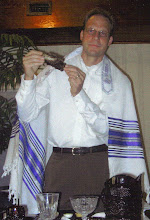
Seder Meal 2007
How 'bout that prayer shawl & the ribs?
WHOZAT?
Keith Tilley
Crockett, TX, United States
FOLLOWER OF JESUS, HUSBAND/FATHER, SON/BROTHER, PASTOR(United Methodist Tribe), GRADUATE (Texas State U., Stephen F. Austin U., Asbury Seminary) STUDENT(George Fox, Leadership in Emerging Culture), PASSIONATE(Mission of God)!